Weezer: All Albums Ranked
This is the ranking we have been both looking forward to making AND dreading the most. Putting anything other than Blue and Pinkerton in positions 1 and 2 is generally sacrilege in Weezer fandom…so brace yourselves people. We have undertaken the tricky task of ranking every Weezer album and picking out some key (and lesser-known) tracks. What you do you think? Check out the Spotify playlist, submit your own ranking, have your say in the comments below, and check out some of our other rankings!




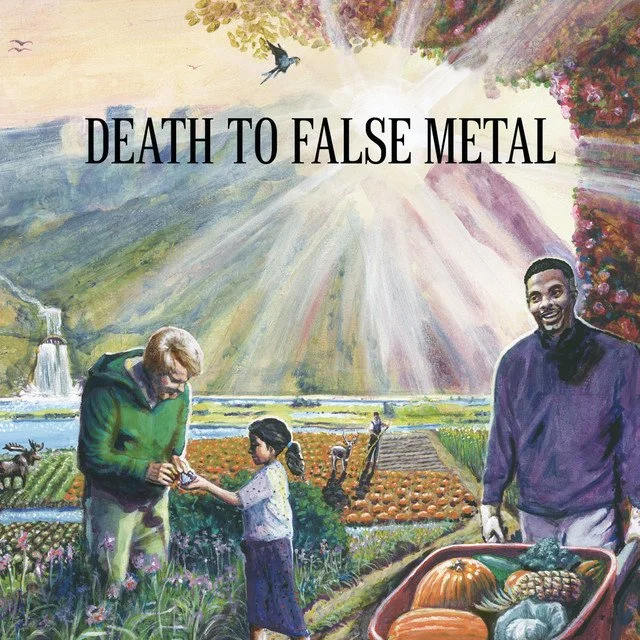
Ok, ok, you can call this a cop out if you want. Is it fair to include a b-sides collection in an album ranking? Well yes, I think so, because ‘Death To False Metal’ was marketed and sold as an album in its own right, and I distinctly remember spending a whopping £14.99 on buying the CD. So yes, I am including it. And I’d like a refund please.
‘Death to False Metal’ (which had the original working title of ‘Odds and Ends’) is a rare thing, being an album that is perfectly listenable, yet utterly forgettable. Essentially a compilation of songs that were written over a 10-year period, recorded in the early 2000s, and left on the cutting room floor, it followed the string of ‘Red’, ‘Raditude’ and ‘Hurley’ records, during an era when Weezer’s output was arguably more about quantity than quality.
Opener ‘Turning up the Radio’ was the product of Rivers Cuomo's songwriting endeavour ‘Let's Write a Sawng’, a project where the frontman organised a 15-step programme where fans were invited to submit ideas such as titles, chord progressions and melodies to create a collaborative song through YouTube. The resulting song has 17 co-writers and conforms to Rivers’ much-debated songwriting template - a well-crafted nugget of ‘Raditude’-esque pop, but with very little replay value.
The energy of ‘Everyone’ is fun, and it is arguably the closest that Weezer have ever sounded to Nirvana with its repeated vocal lines and feedback-drenched guitar lines. ‘I Don’t Want Your Loving’, which has existed in a different form as a Rivers solo track, sounds great with beefy guitars. Aside from these moments, ‘Death to False Metal’ is mostly a showcase of questionable lyrics (‘Autopiot’), ineffective quirkiness (‘I’m a Robot’) and half-baked ideas (‘Losing My Mind’).
Standout Tracks: ‘I Don’t Want Your Loving’, ‘Everyone’

As the Spring equinox drew near, Weezer announced arguably their most ambitious project to date: At the start of every season, a new 7-song EP / mini-album would drop, totalling a gradual release of 28 songs across the whole year. All they needed was a strong figurehead album to herald the project, build hype and unite the fanbase, coming in the form of ‘SZNZ: Spring’...
And it was so boring.
Despite a runtime of barely more than 20 minutes, ‘Spring’ drags in so many places. The band’s traditional electric and bass guitars are almost completely omitted in favour of ukeleles and mandolins, creating a frustratingly upbeat tone that has very little sonic variety. Rivers Cuomo’s ability to write huge singalong choruses is lost somewhere along the way, with tracks like ‘All This Love’ and ‘Angels On Vacation’ being largely forgettable.
At least there are a couple of fun tracks; ‘A little Bit Of love’ the first single, takes a bouncy country style, while ‘The Sound Of Drums’ features an enjoyable, if sadly short, guitar solo; but they aren’t enough to reward the listener for surviving this mini-album. Ending on a rather unceremonious note with the lacklustre ‘Wild At Heart’, ‘Spring’ fails to leave much of a lasting impression, almost sabotaging the ‘SZNZ’ project before it even took off. Thankfully, things picked up from here.
Standout Tracks: ‘The Sound Of Drums’, ‘A Little Bit Of Love’
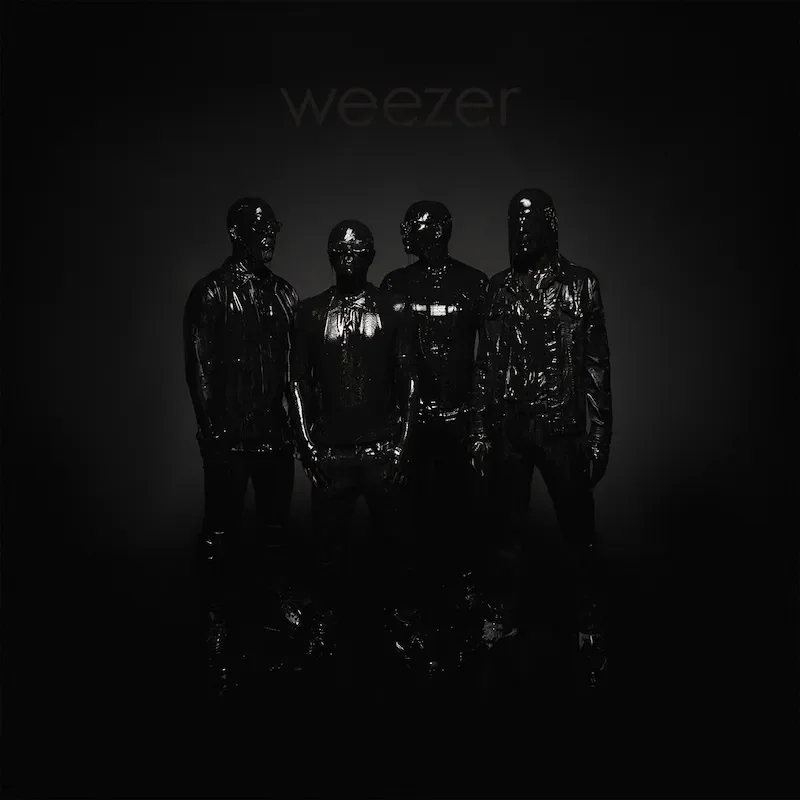
Perhaps we should have known that the excellent career resurgence of ‘Everything Will Be Alright In The End’, ‘The White Album’ and (to an extent) ‘Pacific Daydream’ wasn’t sustainable.
‘The Black Album’ was mentioned in interviews that were promoting ‘The White Album’, but it didn’t came out for a further 2 years. The anticipation was high, partly for its lengthy gestation and especially as it had been touted as a darker, more menacing version of Weezer. However, the end result was a little like ‘Raditude’ again, albeit blander. The processed beats and pop structures of ‘Pacific Daydream’ returned, in a lesser form, with even fewer guitars and none of the garage rock glory of ‘classic Weezer’. The overall impression is that this is more of a Rivers solo record with a keyboard and drum machine, with none of Pat’s normal drum brilliance. Just listen to the turgid ‘The Prince Who Wanted Everything’ or the naff ‘Byzantine’ for evidence.
There is a clear highlight which stands out a mile from the rest of the record, though. ‘High As a Kite’ is one of Weezer’s best ever ballads - a genuine tearjerker and thought-provoker with beautiful orchestration on which they would build a couple of years later in ‘OK Human’. With its Beatles-esque melody, whimsical chorus and brilliant funky bassline, ‘High as a Kite’ is sublime, and utterly unmatched by anything else here.
Opener ‘Can’t Knock The Hustle’ has some interesting samples and quirky sounds, but it quickly outstays its welcome and begins to sound more like one of The Offspring’s novelty songs. ‘Living in LA’ and ‘I’m Just Being Honest’ have some promising ideas, and ‘Too Many Thoughts in My Head’ is a fast-paced, propulsive and dark song that doesn’t sound like anything else that Weezer have ever made. But overall, ‘The Black Album’ was, and still is, a massive disappointment.
Standout Tracks: ‘High as a Kite’, ‘Too Many Thoughts in My Head’
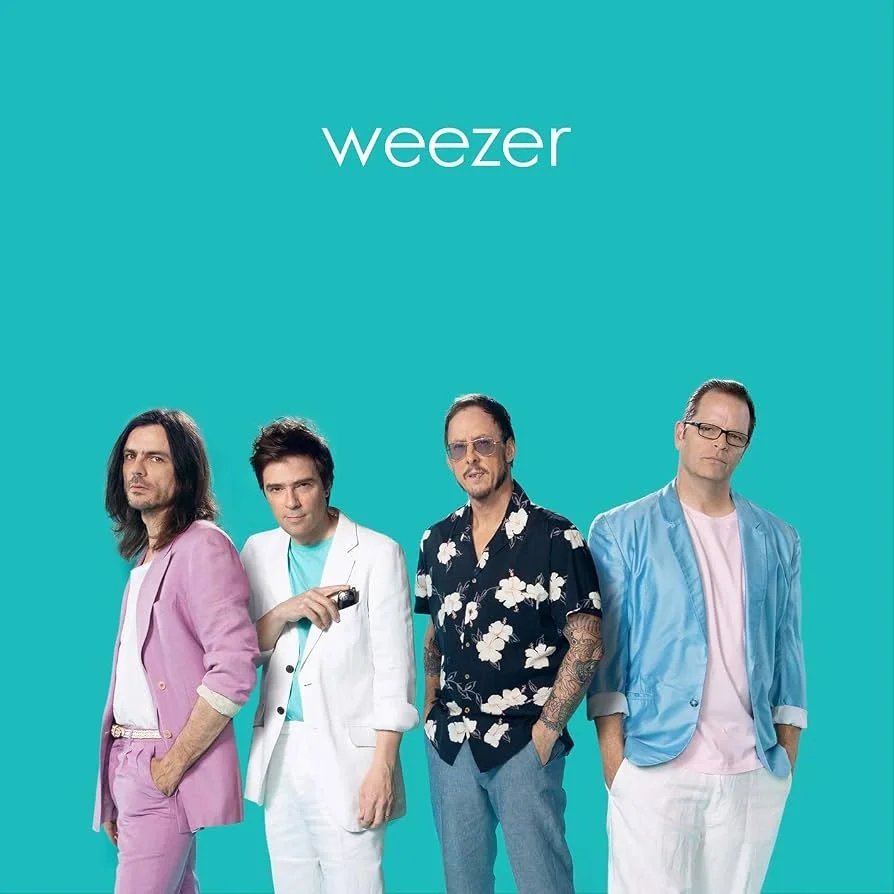
This was a weird one. In 2019 Weezer released two self-titled records, and neither came remotely close to ‘Blue’, ‘Green’ or ‘Red’ (and, more recently, ‘Gold’). As per the review above, ‘Black’ was a bit of a stinker. Is it fair to rank ‘Teal’ higher, given that it is a covers album? If the main criteria are ‘Is it an enjoyable listen?’ and ‘Would I listen to it again?’, then yes. These covers are faithful - to a fault - to the originals, but they are great versions and there are far worse ways to spend 45 minutes than listen to ‘Teal’.
Sometimes when bands release covers, they do it to highlight rare songs from lesser-known bands that their fans may dig (examples including Nirvana, Slayer, The Wildhearts, Green Day, Lamb of God, Paramore and many, many more). Not so Weezer. Their choices of covers are always popular songs from well-known bands. Live, they have covered Radiohead’s ‘Paranoid Android’, Fall Out Boy’s ‘Sugar, We’re Going Down’, Wheatus’ ‘Teenage Dirtbag’ and a number of others. ‘The Teal Album’ plays like a ‘Greatest Hits of the 70s and 80s’ compilation, through a highly polished and quantized late 2010’s Weezer filter.
Opening track ‘Africa’ (by inventive rockers Toto) is an absolute joy, with Rivers’ voice sounding particularly warm in the verses. Tears For Fears’ ‘Everybody Wants To Rule The World’. Eurythmics’ ‘Sweet Dreams’ and The Turtles’ ‘Happy Together’ are note-for-note recreations of the originals, making them serviceable but inessential, largely pointless, but pleasant. More interesting are the ironic ‘No Scrubs’ (by 90s R&B trio TLC), and the ballsy take on Black Sabbath’s ‘Paranoid’, with guitarist Brian Bell on vocals.
If you need something on in the background, that pretty much anyone will like but is essentially musical wallpaper, then ‘Teal’ is your album. But is it a Weezer classic? Erm, no.
Standout Tracks: ‘Africa’, ‘No Scrubs’, ‘Paranoid'’
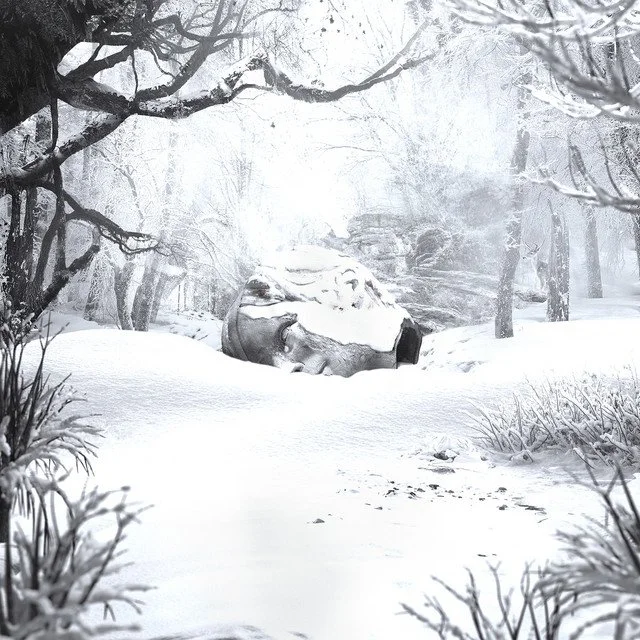
The final installment of the ‘SZNZ’ project, while not as good as ‘Summer’ and ‘Autumn’, soars leagues above ‘Spring’, with the band returning to what they do best: Rapid fast solos, striding basslines and the traditional Weezer sound no one else can replicate. While it may not be all perfect, it serves as a genuinely fun experimental record, with key moments such as the bridge of ‘Iambic Pentameter’ and ‘The One That Got Away’, a song that keeps building with the help of some playful guitar work.
Some lyrics are admittedly cheesy, especially the start of ‘Basketball’ and the cringe-inducing opener ‘I Want A Dog’ with some questionable line delivery from Rivers, while the shoehorned ‘Sheraton Commander’ could easily have been left out and largely exists to ensure that there is a Vivaldi flourish in each of the EPs. However, these issues are overshadowed by the ending 3 tracks, some of the strongest across the year-long project, culminating with the grandiose closer, ‘The Deep and Dreamless Sleep’. It’s a euphoric anthem, perfect to end ‘SZNZ’ on a high with moments for the whole band to shine in.
Overall, ‘Winter’ may not be the best project in the SZNZ franchise, but by no means is it one to miss out on.
Standout Tracks: ‘The Deep And Dreamless Sleep’, ‘Iambic Pentameter’, ‘The One That Got Away’
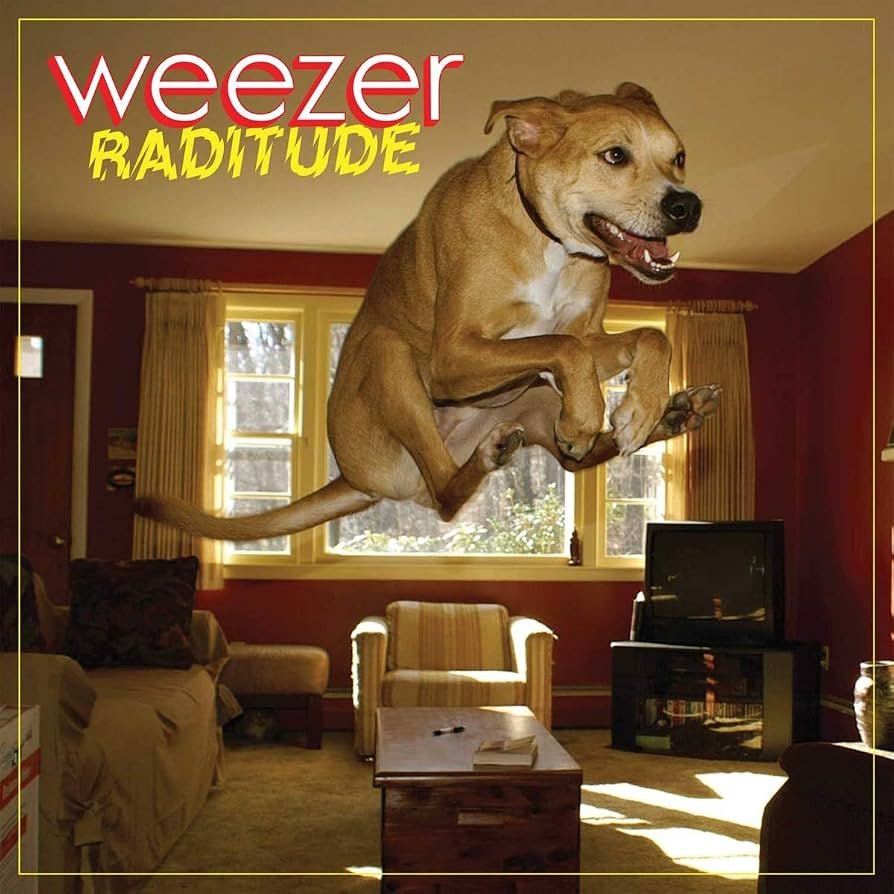
Most Weezer fans tend to say that ‘Raditude’ is the worst record by far. We don’t think it’s their worst, as it has several redeeming features - but it’s definitely down there.
It is certainly without question that ‘Raditude’ was Weezer’s biggest attempt at writing a ‘pop’ record, both sonically and in terms of verse-chorus-verse-chorus-bridge-chorus-end song structures. Half of these songs are ones that Rivers Cuomo could have written in his sleep (in particular, ‘Tripping Down the Freeway’, ‘In the Mall’ and ‘I’m Your Daddy’), with familiar melodies and often genuinely cringeworthy lyrics (especially ‘I’m Your Daddy’). Everything is so formulaic, peppered with inoffensive guitars, quantized beats and cheesy synths - the kind of thing that Suno or other AI platforms can generate in seconds nowadays.
Yet, lead single and opening track '(If You’re Wondering If I Want You To) I Want You To’ is one of Weezer’s most fun, carefree songs of the 00s. The Indian-inspired ‘Love is the Answer’, complete with sitars and gorgeous female backing vocals, is an underrated, uplifting treat. And the best track of all never actually made it onto the main album, but instead was included in the special edition - the slow-burning, vulnerable ‘The Prettiest Girl in the Whole Wide World’ which has the wonderful Weezer charm that was so loveable when they first exploded in the mid-90s. In an alternate universe, this track and other b-sides ‘The Underdogs’ and ‘Run Over By a Track’ made it onto the main tracklisting and ‘Raditude’ was actually pretty good. Sadly, the universe we are in decided to include ‘The Girl Got Hot’, which has a fair claim as Weezer’s worst ever song.
Standout tracks: ‘Love is the Answer’, ‘The Prettiest Girl in Whole Wide World’, ‘(If You’re Wondering If I Want You To) I Want You To’
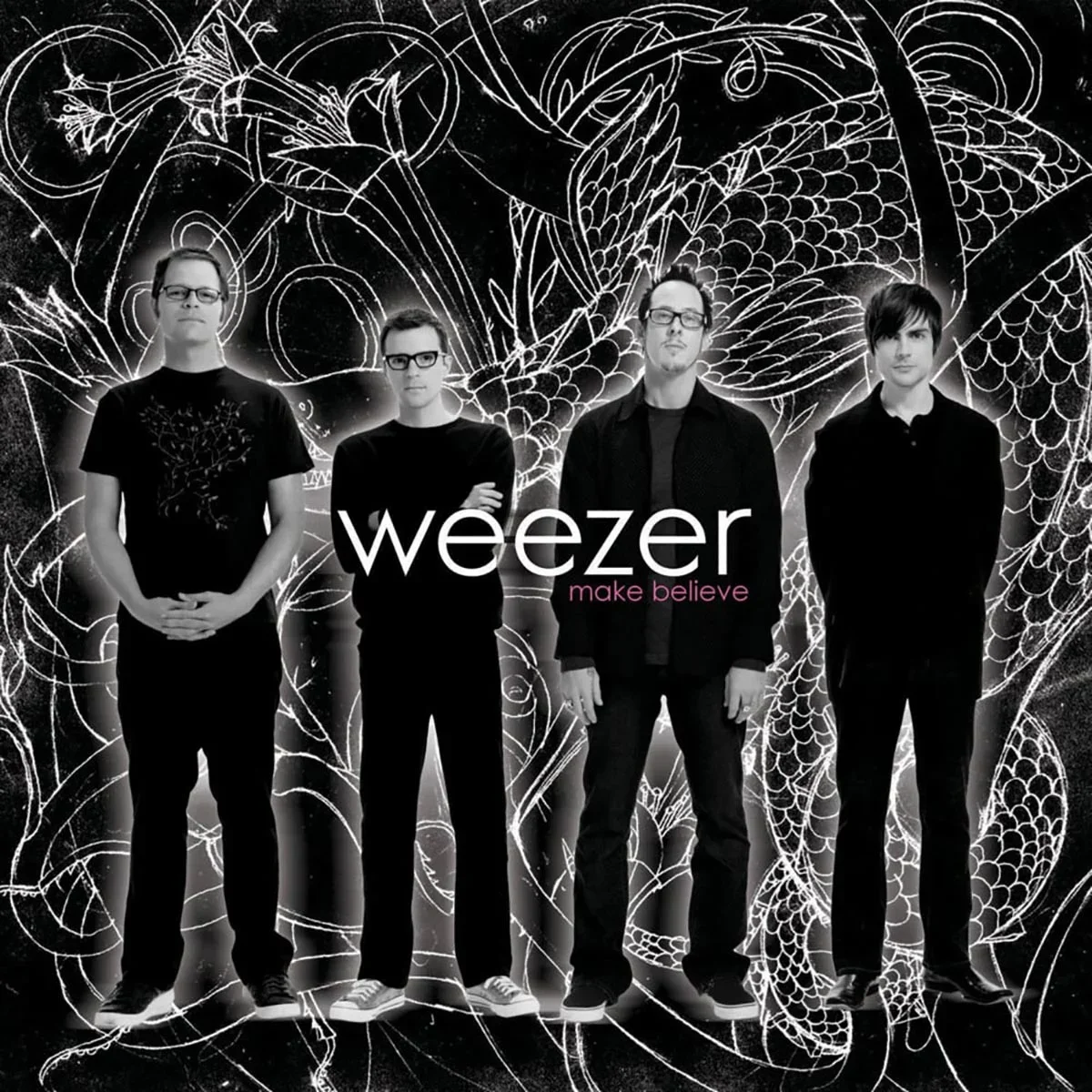
‘Make Believe’ is best known for spawning ‘Beverley Hills’, a song so divisive that it is simultaneously one of Weezer’s most well-known and also most hated songs. There is a hilarious 30-minute video by YouTuber Pat Finnerty about it, in his “What Makes This Song Stink?” series - and even if you don’t actually mind the song yourself, it’s still well worth watching because it dives deep into the existential anguish of being an old-school Weezer fan.
We do actually quite like ‘Beverley Hills’. Its charm comes from its simplicity, its deeply ironic lyrics (which are more witty than casual listeners may give credit for) and a singalong chorus that is deliberately slow and basic, charming stoners, AC/DC metalheads and Hip Hop fans alike. Beyond this opening track, much of ‘Make Believe’ sounds more like late 90s / early 2000s British indie, and it is a significant departure from the spiky pop-punk of 2001’s ‘Green Album’ and the riff-heavy twists and turns of 2002’s ‘Maladroit’. It is a solid, consistent record that is mostly comprised of mid-paced 4/4 tracks with big choruses and keyboard flourishes, lacking the breezy sunshine and quirky harmonies of Weezer’s best work and carrying a deeply personal weight throughout.
So, why so low? There isn’t anything especially bad here, but it is a tough record to love. Like ‘The Black Album’ 14 years later, ‘Make Believe’ often sounds more like a Rivers solo album, with fewer standout moments from the other members. It can become a slog to listen to the whole thing in one sitting, but you can single out any one of the individual songs and enjoy it.
Standout Tracks: ‘This is Such a Pity’, ‘Perfect Situation’

After the underwhelming trainwreck that was ‘Spring’, the 2022 Summer Solstice saw Weezer take a shot at redeeming the ‘SZNZ’ project with the second instalment, and this time it paid off. Ignoring the patchy mediocre opener ‘Lawn Chair’, the weakest moment on the album, the single ‘Records’ proves Weezer still had the gift of stadium-sized choruses, grooving guitar chugs and the ability to drop the F-Word whenever they felt like it. Sure, most tracks lean into a more ‘radio-friendly’ and ‘pop’ flavour, but once you hear the band’s dedication and the amount of fun they had in the studio, it’s hard not to smile along to the upbeat striding chorus of ‘The Opposite Of Me’.
That’s not to say the heaviness has been left behind. The frankly bonkers finale of ‘Thank You and Good Night’ is packed full of the same wild energy reminiscent of the ‘Futurescope Trilogy’ from ‘Everything Will Be Alright In The End’ while darker lyrics and an aggressive soundscape punctuate the bridge of penultimate song ‘Cuomoville’. This helped to lay the heavy groundworks for what would become ‘The Gold Album’, while proving that Weezer had not lost the raw power from their earlier works. It’s a fun listen, but not quite as good as the following SZNZ project: ‘Autumn’.
Standout Tracks: ‘Thank You and Good Night’, ‘Records’, ‘Blue Like Jazz’

Just look at Jorge Garcia’s face! Has there ever been a warmer, more friendly smile?
‘Hurley’ was released in the middle of the 2-year blur of productivity that also included ‘The Red Album’ (2008), ‘Raditude’ (2009) and ‘Death to False Metal’ (2010), plus some one-off singles (e.g. ‘Represent’) where the criticism of ‘quantity over quality’ could be applied quite fairly. In its promotional campaign, ‘Hurley’ was touted as a return to form, tapping into the magic of ‘Blue’ and ‘Pinkerton’. There are certainly some moments where the passion becomes more visceral, the ideas become less formulaic and the guitars becaome a bit noisier; but when reviewing all of Weezer’s output it is hard to find a space for ‘Hurley’ that is above mid-table.
‘Trainwrecks’ is Bon Jovi’s ‘Blood on Blood’ (from their ‘New Jersey’ record) through an apathetic geek filter (“We don’t update our blogs / We think it’s uncool to be on time”), and it has a spine-tingling quality that only certain stadium rock acts (Bruce Springsteen, Coldplay, U2 etc) can achieve. ‘Unspoken’ starts as a delicate acoustic strum, exploding into life with a dark, noisy second part.
This brings us to ‘Where’s My Sex?’, which is a real head-scratcher. Musically it is bruising and quite fun, echoing the crunchy guitars of Alien Ant Farm’s cover of ‘Smooth Criminal’ or Puddle of Mudd’s ‘She Hates Me’ - but vocally it tips the scale right over to cringe. Apparently the lyrical inspiration came from Rivers’ daughter saying “Where’s my sex?” instead of “Where’s my socks?”. Sometimes in-jokes are best kept within the family..
Elsewhere, opener ‘Memories’ and second track ‘Ruling Me’ are both excellent, with huge choruses and a more rocking energy than anything on ‘Raditude’. ‘Brave New World’ is probably the only song that lives up to the promotional claim that it could have fitted onto ‘Pinkerton’. It has an urgency that picks up the otherwise fairly lacklustre second half of the record, where there is too much filler (‘Run Away’, ‘Smart Girls’, ‘Time Flies’). So ultimately, Hurley is a patchy record with some triumphs and a little too much mediocrity.
Standout tracks: ‘Ruling Me’, ‘Brave New World’, ‘Trainwrecks’
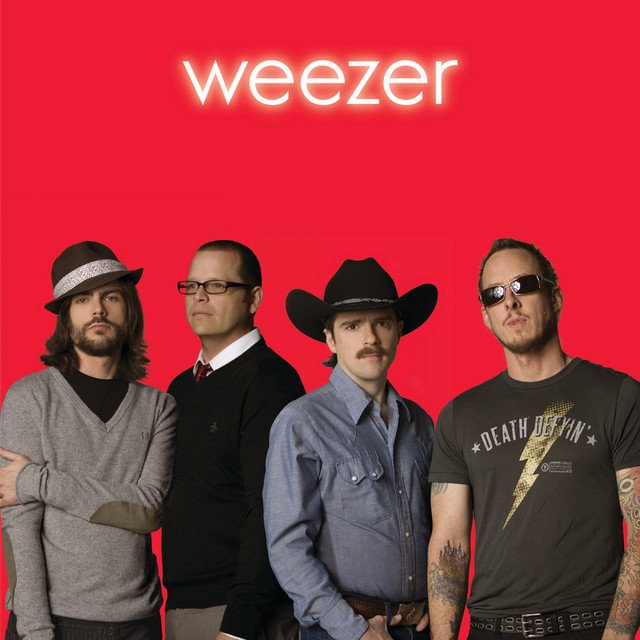
‘The Red Album’ is arguably the most curious record in Weezer’s discography. At times, it showcases some of their best ever ideas (the epic ‘The Greatest Man That Ever Lived’, for starters), but at other times it sounds uninspired (‘Everybody Get Dangerous’ and ‘Automatic’).
‘Dreaming’ encapsulates both extremes within one song. The chorus is classic Weezer, with an effortlessly cool melody that could easily have fitted on ‘The Blue Album’ or ‘Maladroit’. But then we have a bizarre deviation into a twee, pastoral folk ditty where they sing of “goslings in the meadow”. It just about works, but if the song had been a 2-minute blast of the chorus on repeat then no-one would have complained.
The hit single ‘Pork and Beans’ is superb, with witty, self-referential lyrics (even if the mentions of Timbaland and Oakley may not make much sense to listeners in the future) and a brilliant power-pop chorus. Similarly, ‘Troublemaker’ was a tremendous choice for an opener, especially to mark the significance of this being the next self-titled record, following the lacklustre ‘Make Believe’. The aforementioned ‘The Greatest Man That Ever Lived’ is Weezer’s very own ‘Mr Blue Sky’, ‘Welcome to the Black Parade’ or ‘Jesus of Suburbia’, a multi-part extravaganza that starts with a slightly iffy rap (“You try to be cool like you just don’t care, but soon I’ll be dancing in your underwear”) and progresses through stadium rock, barbershop harmonies, pop punk and prog. It is a masterpiece, and its only downside is the fact that much of ‘Red’ struggles to match the heights of Track 2.
There is a curious 3-track run of ‘Thought I Knew’, ‘Cold Dark World’ and ‘Automatic’, where Patrick Wilson (drums), Brian Bell (guitar) and Scott Shriner' (bass) each take it in turns to sing. Like Muse’s ‘The 2nd Law’ album, where bassist Chris Wolstenholme sang a couple of songs, it disrupts the flow of the record, providing an interesting deviation from Weezer’s normal sound but ultimately ensuring that ‘Red’ feels more like an experiment than a completely realised piece of work. It ends on a high, with a triumphant ballad ‘The Angel and the One’, and the special edition bonus tracks are superb (especially ‘Miss Sweeney’ and ‘Pig’), so it is well worth a listen, but it certainly has its flaws.
Standout tracks: ‘The Greatest Man That Ever Lived’, ‘The Angel and the One’, ‘Troublemaker’
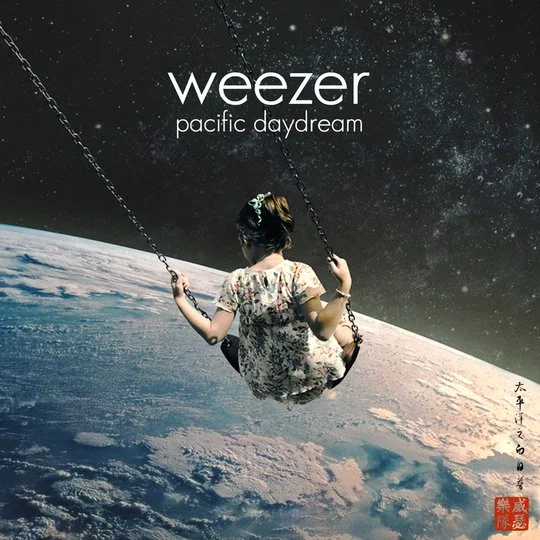
Following the one-two of ‘Everything Will Be Alright in The End’ and ‘The White Album’, Weezer were on a roll. Barely a year after ‘White’, they returned with a further record, which was a curious bonus because the next album they had been talking about in the press was actually ‘The Black Album’ which wouldn’t see the light of day for a further 2 years.
‘Pacific Daydream’ could therefore be legitimately thought of as a stop-gap release, and less monumental than ‘White’ and ‘Black’. For many fans, it was deemed unneccesary, and disappointing, but in our opinion it is an underrated gem that rewards multiple listens. In fact, its weakest moments are the singles - the strangely underwhelming ‘Feels Like Summer’ and the cloying ‘Happy Hour’, neither of which have the depth of album tracks such as ‘QB Blitz’, ‘Sweet Mary’ and ‘Any Friend of Diane’s’. Outside of these singles, there are some fantastic tracks here.
The production throughout the record is superb, particularly in headphones. Weezer’s classic loud guitars make occasional appearances, such as in the spiky opener ‘Mexican Fender’, but often ‘Pacific Daydream’ is built around thick drums, ethereal synths, distant acoustic guitars, sparse bass, bells, xylophones, quirky percussion and reverb-drenched vocals, the best examples being in the infectious ‘Beach Boys’ and the perfect pop of ‘Weekend Woman’. For the most part, the songwriting is excellent and it is quite shocking how low ‘Pacific Daydream’ tends to be ranked in most fans’ Weezer rankings.
Standout tracks: ‘Weekend Woman’, ‘Mexican Fender’, ‘QB Blitz’
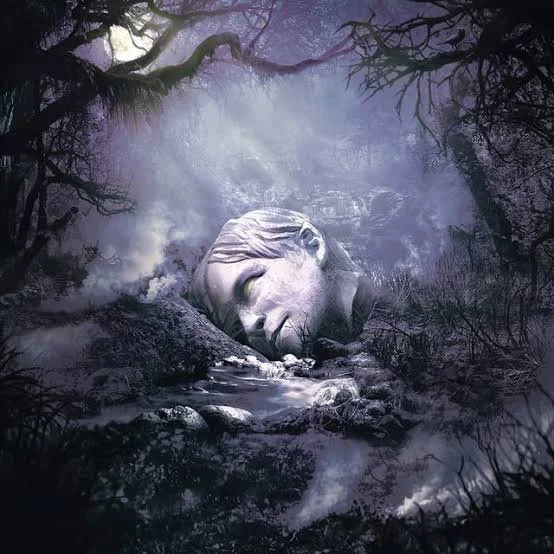
Autumn is arguably the strongest of the ‘SZNZ’ mini-albums. That doesn’t make it an easy one to describe though. On one hand, it places a lot of emphasis on synthesisers in fast dance style tracks (ironically in the track ‘Can’t Dance, Don’t Ask Me’), but then suddenly switches to a much darker concept present in the very next song ‘Get Off On The Pain’. This pendulum swings between fun experimentalism and more sinister undertones throughout ‘Autumn’, creating a strikingly distinct record much different to the other ‘SZNZ’ entries. Weezer took lots of diverse inspiration to create these tracks, citing artists like Fall Out Boy and John Newman to help shape this starkly different record, not to forget Vivaldi’s influence on ‘Tastes Like Pain’.
And it works out really well. The production is very strong, even if it becomes a little obvious where autotune was utilised in the chorus of ‘What Happens After You?’. ‘Should She Stay Or Should She Go’ features some jazz-style instrumentation, including hidden improv-style piano and a concluding saxophone solo as it fades out, continuing to prove the band's versatility. While the other ‘SZNZ’ albums may have one or two songs much stronger than those on this record, ‘Autumn’ is the most consistent, but not without fun artistic flairs, solos and creative lyrics from Rivers.
It’s not Weezer’s best album, but my god is it good. Definitely don’t miss out on this hidden gem.
Standout Tracks: ‘Get Off On The Pain’, ‘Can’t Dance, Don’t Ask Me’, ‘Should She Stay Or Should She Go’
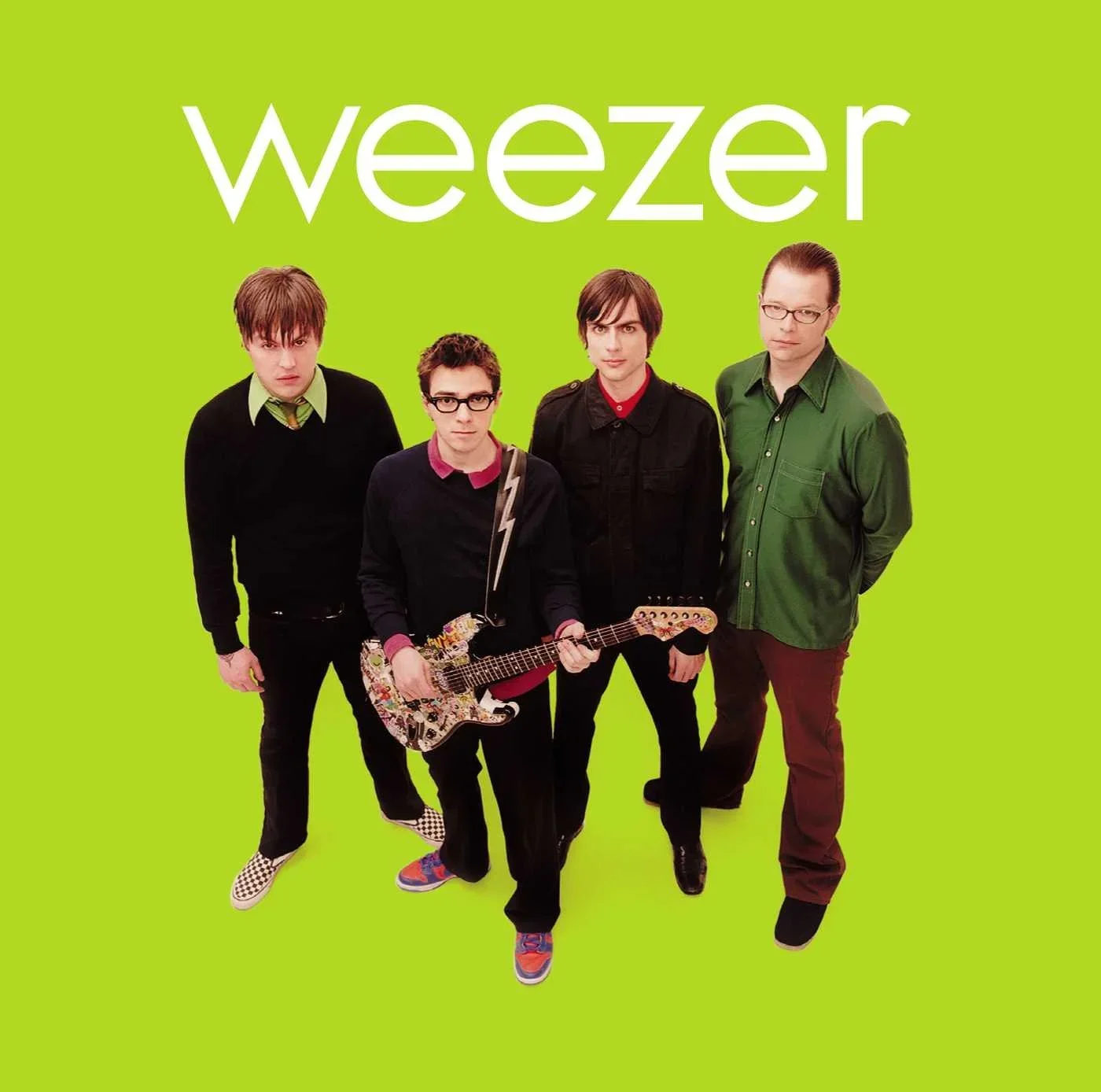
Weezer dropped off the map for a while following 1996’s ‘Pinkerton’, so their return in 2001 was heralded with considerable hype, focusing particularly on the mega-hits ‘Hash Pipe’ and ‘Island in the Sun’, both of which have aged extremely well and never get tiresome, no matter how overplayed they may be. Toto even covered ‘Hash Pipe’, in response to Weezer covering ‘Africa’ and ‘Rosanna’ in 2018; and ‘Island in the Sun’ is so popular that it has far exceeded 1 BILLION streams, which isn’t bad considering that ‘The Green Album’ came out in 2001, back when everyone was still buying CDs.
This was the only Weezer record to feature Mikey Welsh (RIP) on bass. Mikey joined following the departure of original bassist Matt Sharp, but his tenure with Weezer was short-lived due to some personal troubles.
Avid Weezer fans will know that Rivers Cuomo wrote a considerable amount of songs in the late 90s and early 00s. However, rather than being tempted to release a long record, Weezer picked just 10 tracks for their comeback, all of which were similar in tone, length and message. ‘Green’ is arguably their most ‘pop-punk’ / ‘power-pop’ record, with Green Day-esque guitars, tonnes of vocal harmonies, high-energy drums and nothing really resembling ‘Butterfly’, ‘Only in Dreams’ or ‘Undone (The Sweater Song)’. Everything here is high-tempo rock of the highest order, the only exception being the beautiful, delicate organ-led ballad ‘I Do’ which was included as a bonus track on the limited edition.
‘The Green Album’s one-dimensional nature is both its greatest strength and also its weakness. It is a fun, enjoyable blast, and you know exactly what you are getting - but it also lacks the variety and emotional depth that permeate the other records. By the time you reach late-album cuts ‘Simple Pages’ and ‘Glorious Day’, it starts to get a little repetitive. There is nothing bad here - just a little bland towards the end.
Standout tracks: ‘Knockdown Dragout’, ‘Photograph’, ‘Crab’
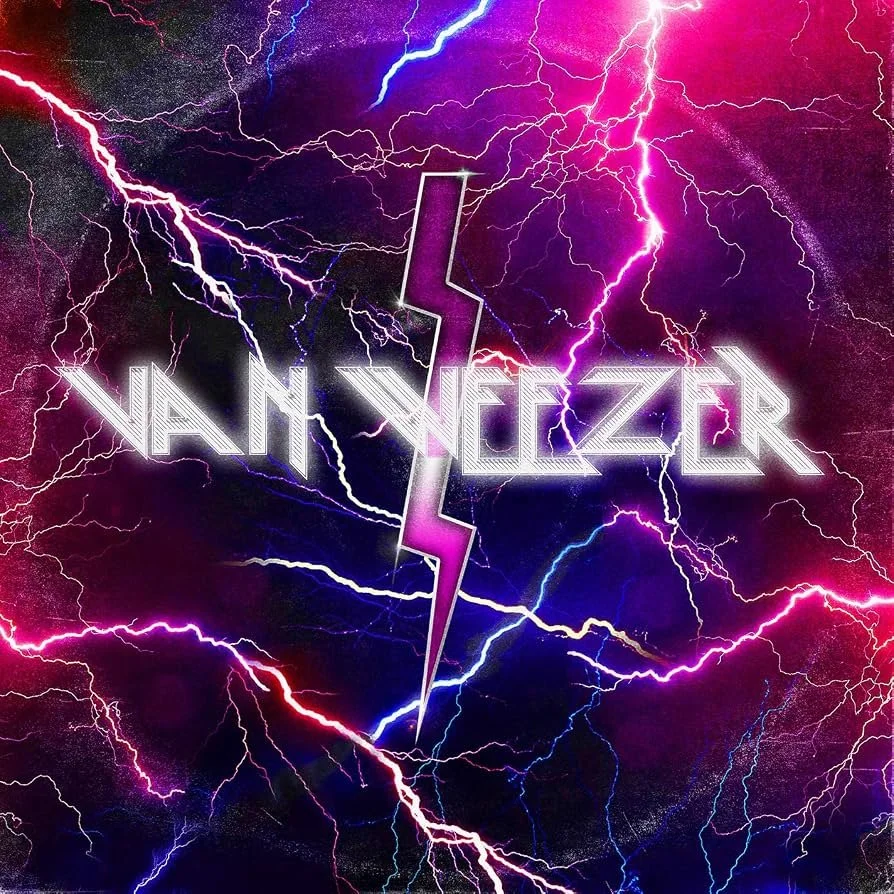
Not only did Weezer release one of the greatest albums of 2021 with the outstanding ‘OK Human’, but they put out a whole other album too - and the closest thing to a ‘concept record’ they have come since the aborted ‘Songs From The Black Hole’ project that was originally intended as their sophomore outing, before shelving it in favour of ‘Pinkerton’. The concept of ‘Van Weezer’ was to fulfil a ROCKSTAR ambition, making a collection of Van Halen-esque stadium rock / heavy metal songs, complete with huge electronic guitars and blazing solos.
For the most part, it works. Check out the intro of ‘The End of the Game’ for the best example, with some seriously impressive fretboard work, giving way to an arena-sized song with lyrics that veer from brilliant (‘I knew you would crank this song, air-guitaring with your headphones on’) to ridiculous (‘You got me crying like when Aslan died’), and one of Weezer's best-ever choruses. The way they incorporate Ozzy Osborne’s ‘Crazy Train’ riff into the superb ‘Blue Dream’ is inspired. The inclusion of an awesome motorbike rev in the sugary ‘Sheila Can Do It’ helps transfer this track from a ‘Green Album’ pop-punk anthem into something that Meatloaf would be proud of. Opener ‘Hero’ may not be the heaviest or most rocking, but it is a brilliant song, and the music video that celebrated healthcare workers was extremely powerful, coming out in the midst of the Covid pandemic.
There are a couple of less inspired moments, namely ‘1 More Hit’ and ‘She Needs Me’, but for the most part ‘Van Weezer’ is great fun. It may not fully achieve its goal of wall-to-wall heaviness, and sometimes it feels more of a pastiche (“In heavy metal we trust” - ‘Beginning of the End’), but it easily makes the Top 10.
Standout Tracks: ‘Blue Dream’, ‘Hero’, ‘The End of the Game’
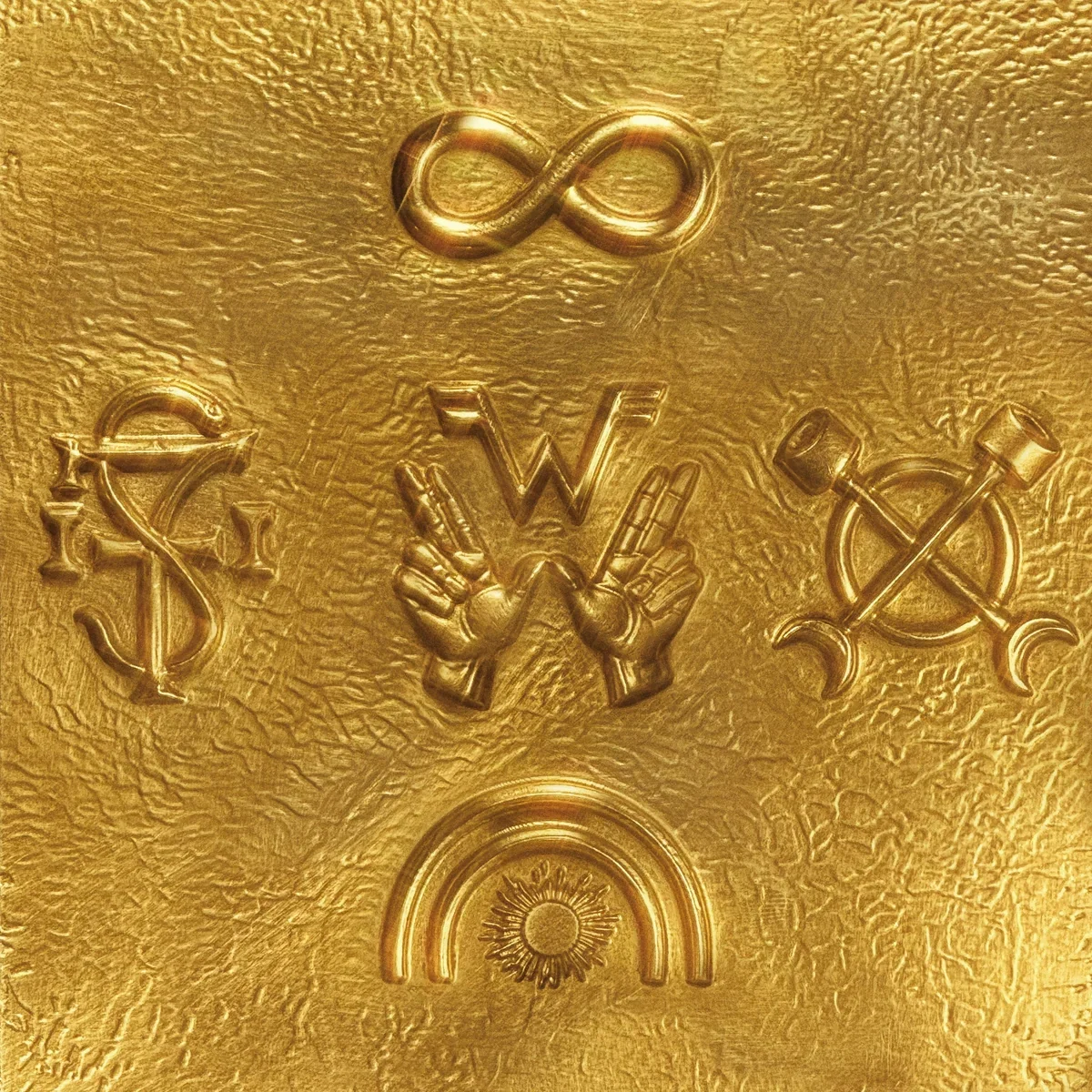
After a series of bizarre promotional stunts (sending fans on treasure hunts, playing pop-up shows including an acoustic rooftop gig, and organising Weezer-themed game nights), and a while after ‘Shine Again’ was released as a standalone single, it was finally announced that the next record was going to be another self-titled effort, this time to be christened ‘The Gold Album’.
In truth, ‘Shine Again’ was good but not great. Better was second single ‘We Might As Well Be Strangers’, a duet with Wednesday which brought back the timeless songwriting of ‘Everything Will Be Alright In The End’, particularly that album’s fantastic duet ‘Go Away’. But this was then followed by the perplexing ‘CEO’ (which admittedly gets better with every listen), and it wasn’t clear whether the intentional repeat of ‘Undone (The Sweater Song)’ meant that Weezer were A) Running out of ideas, B) Harking back to past glories, C) Taking the piss out of themselves, or D) Just having fun.
Listening to these singles in the concept of the whole record, it became clear that the answer was mostly D) - Just having fun. ‘Gold’ is a hoot from start to finish, and arguably the most ‘Weezer-sounding Weezer album’ since ‘Maladroit’, in terms of capturing their garage rock sound in its purist form. While so much of their work from ‘Make Believe’ onwards has been ‘on the grid’, with plenty of studio polish, ‘Gold’ generally sounds like some microphones were placed in the rehearsal room while the guys had some fun. And what a guitar / bass tone! It is so thick that it is practically chewy - just check out ‘The Show Must Go On’ and ‘Don’t Make It Weird’.
‘Gold’ was Weezer’s first full-length since ‘Van Weezer’, and the first release since the divisive ‘SZNZ’ project. For many, Weezer’s last truly great music was on ‘The White Album’ or ‘OK Human’, and some lacklustre live performances in 2023-25 suggested that their best days may now be beyond them. Thankfully, the break did them the world of good, and there is a confidence, looseness and sense of fun in ‘Gold’ that often reaches the heights of ‘EWBAITE’, ‘Blue’ and ‘White’. The lyrics are often brilliant (“Bought a toaster just to make some toast / First I had to scan a QR code” - ‘Hoops’; “Some people call me River / And then they tell me that I don’t got any flow” - ‘Don’t Make It Weird’), and perhaps it helped that the songwriting was very much a collaborative effort this time, rather than the responsibility all being on Rivers. Patrick Wilson and Brian Bell brought a lot of their own ideas, and some external writers contributed to ‘The Show Must Go On’, ‘Up in the Clouds’, ‘We Might As Well Be Strangers’ and ‘The LA Sound’. An absolute gem of record. Now….where will they go from here??
Standout Tracks: ‘Don’t Make It Weird’, ‘We Might As Well Be Strangers’, ‘The LA Sound’
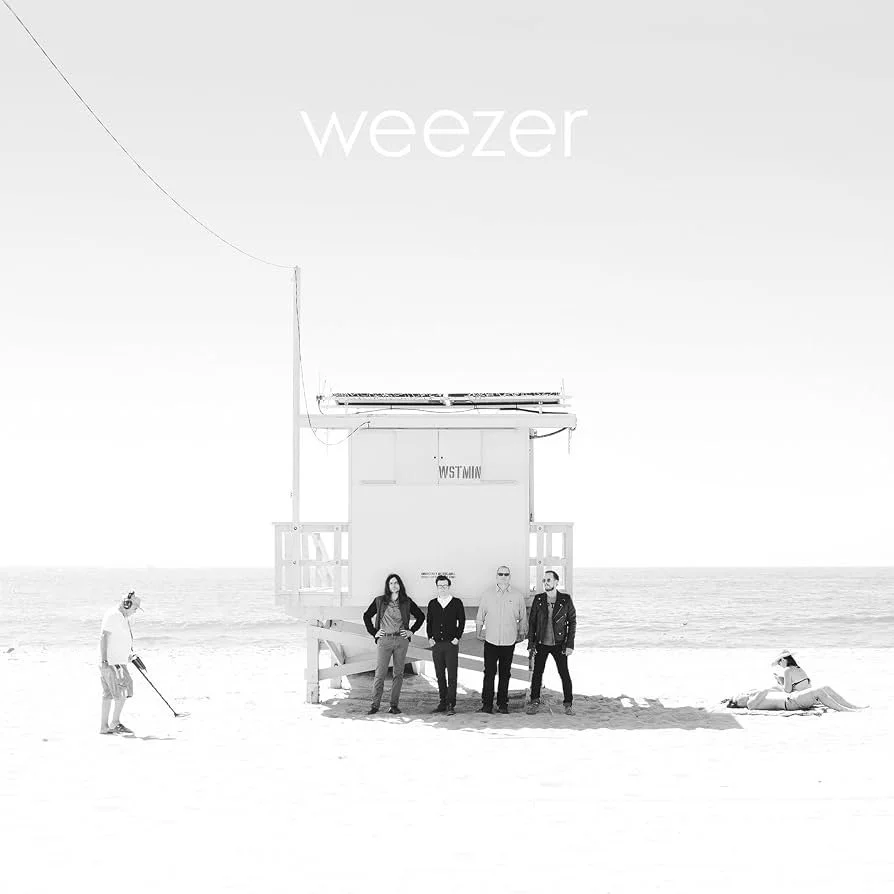
Proving that ‘Everything Will Be Alright In The End’ was no fluke, ‘The White Album’ does an incredible job of evoking the sun-drenched, bleached image of the front cover. There are moments, such as the brilliant ‘LA Girls’, where you can practically feel the sand between your toes, as you wander down an emptying beach after most people have gone home.
Kicking off with the excellent ‘California Kids’, which is a coming-of-age tale of sorts, ‘White’ portrays a world that seems to both celebrate and be wary of the hedonism of California, and the ups and downs of romance. There are brief explorations of drugs (‘Do You Want To Get High?’), booze (‘Summer Elaine and Drunk Dori’), gender roles in romantic relationships (‘Thank God For Girls’), and loneliness (‘Jacked Up’). This album was promoted as Weezer’s “beach record”, and it fulfils this role well, with a summery tone, some whimsical moments (especially ‘(Girl We Got A) Good Thing’ (which started life as ‘Codependent’, a demo from the ‘EWBAITE’ sessions), one of their most Beach Boys-influenced songs), triumphant choruses (‘King of the World’) and bright, light production.
Were it not for the brilliance of 5 other Weezer albums, this could have a rightful claim as the best one, and it would certainly be the best album of most other bands.
Standout Tracks: ‘Summer Elaine and Drunk Dori’, ‘(Girl We Got A) Good Thing’, ‘King of the World’
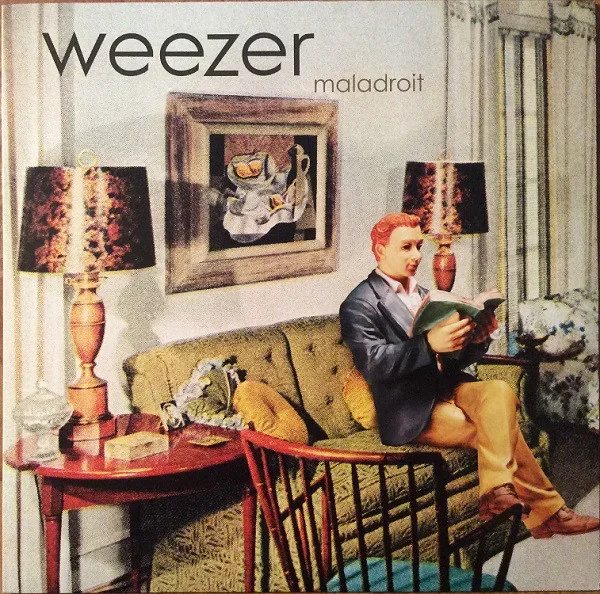
Giving ‘Maladroit’ a spin every once in a while is the musical equivalent of catching up with a favourite cousin. You may not think about them all the time, but whenever you get together it feels so comforting and natural, and life always feels a bit better afterwards.
The first record to feature Scott Shriner on bass, Weezer’s 4th album is often overlooked and dismissed as something of a compilation of songs that didn’t make it onto the previous year’s ‘Green Album’. Yes, some of the tracks were conceived in the same sessions as ‘Green’ ('Dope Nose’ was written in the same inebriated session as ‘Hash Pipe’, for example), and it was released with none of the fanfare of its predecessor, but ‘Maladroit’ should be revered as a standalone record in its own right.
The production is fantastic, with a raw and live sound that has more in common with Stone Temple Pilots’ first couple of records than the pop-punk polish of ‘Green’. The riffs in songs like ‘Take Control’, ‘Fall Together’ and ‘American Gigalo’ are beefy and innovative, and the melodic progressions in the spiky punk of ‘Possibilities’ and the quirky ‘Death and Destruction’ are some of the most inventive that Weezer have ever had. And has Rivers ever sounded as anguished as he does in ‘Slob’?
Lead single ‘Keep Fishin’, with its Muppet-tastic video, is one of Weezer’s best ever songs - a joyful, playful romp with singalong sections and an impeccable tempo shift after the chorus. This alone is worth the price of admission, especially following the excellent ‘Dope Nose’. Even the comparatively throwaway moments which sound like b-sides, namely ‘Love Explosion’ and ‘Space Rock’, are infused with a loveable whimsy, and at a lean 33 minutes ‘Maladroit’ is a treat.
Standout tracks: ‘December’, ‘Keep Fishin’, ‘Fall Together’
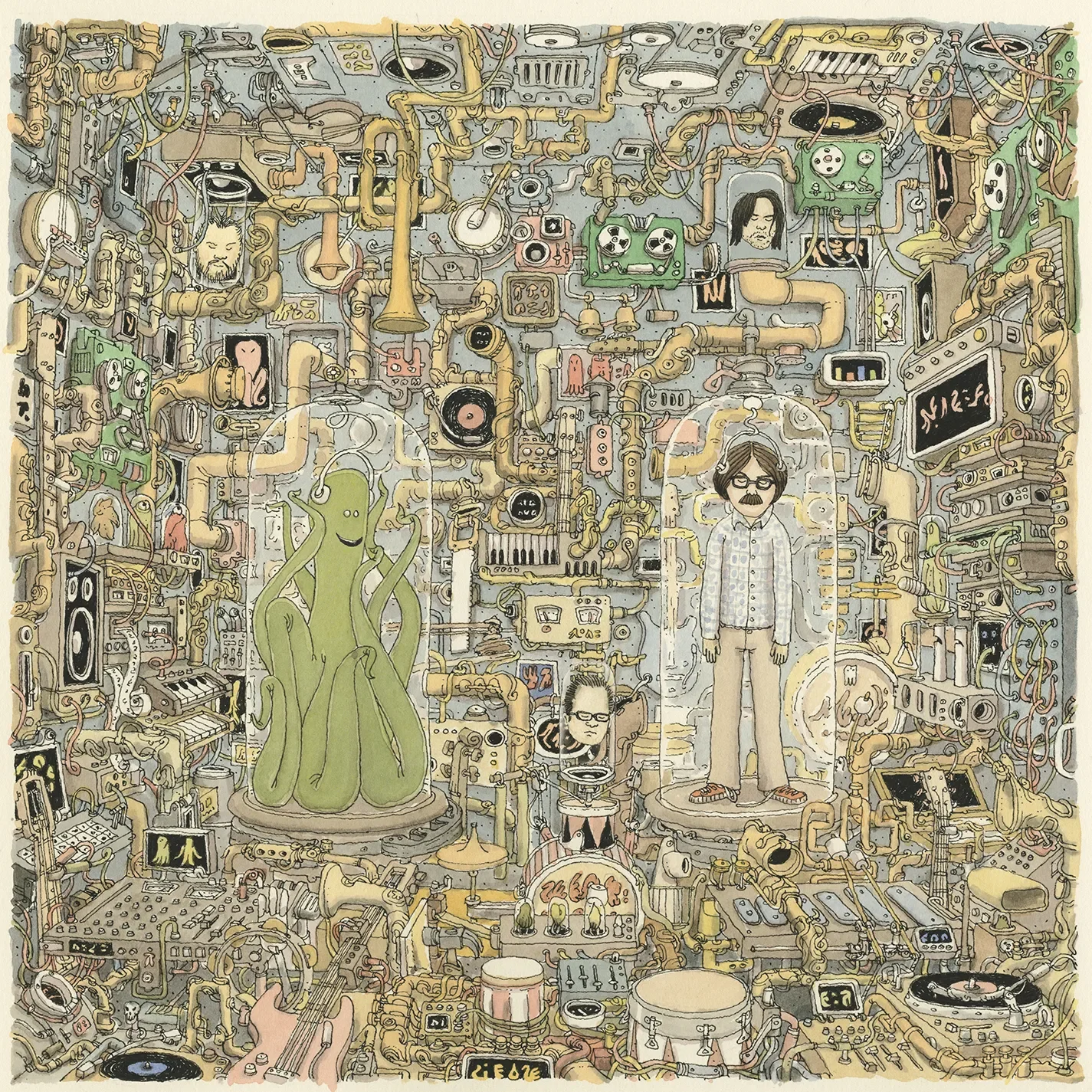
If there is one record that perfectly encapsulates the life-altering confusion of the Covid lockdowns of 2020/21, it is ‘OK Human’. Written and recorded relatively quickly, during a period of time when all touring came to a grinding halt, there is no album that sounds quite like this one. Based more around piano and a chamber orchestra than Weezer’s trademark electric guitars, this record is a beautifully realised and sumptuously produced collection of songs that capture the curious tedium of being kept indoors. The sound is very organic and, well, human throughout, with moments of speeding up and slowing down (the verses of ‘Grapes of Wrath, for example) and a real sense that some of these songs were conceived, written and recorded on the same day. The way that the songs overlap, with minimal moments of total silence between tracks, also makes this very unique for Weezer, and in some ways this plays out like musical theatre - another reason why it leant itself so well to being performed in its entirety as a livestream event in 2021. Check out the video on YouTube here.
Opener ‘All My Favourite Songs’ is the perfect introduction - an absolute powerhouse of a song that is bolstered by strings and an understated but solid rhythm section. What follows in an embarrassment of riches, from the quirky ‘Aloo Gobi’ (an accurate summary of how we all settled into certain routines during lockdown), the classy ‘Grapes of Wrath’, the tearjerking ‘Bird With a Broken Wing’ and the utterly triumphant ‘Here Comes The Rain’. There are some sweeping orchestral moments (‘Numbers’), lamentations of solitude (‘Playing My Piano’) and darker expressions of sadness and regret (‘Screens’, ‘Dead Roses’).
If you like The Beatles’ ‘White Album’ then you will LOVE this record. It is a masterclass of unique songwriting, and it sits competely apart from everything else in Weezer’s catalogue.
Standout Tracks: ‘Grapes of Wrath’, ‘Here Comes the Rain’, ‘Bird With a Broken Wing’
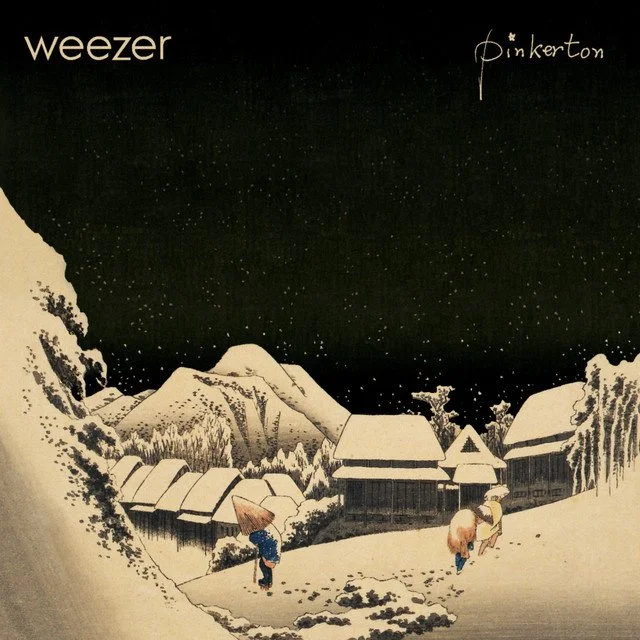
There is so much mythology around ‘Pinkerton’ that it has assumed notoriety over the years. Critics often tell stories of how much ‘Pinkerton’ was panned on its release, and how it has only gained popularity through the passing of time - but for a lot of people ‘Pinkerton’ was deemed a masterpiece the moment it was released, and it wasn’t dismissed anywhere near as much as we are led to believe nowadays.
In reality, ‘Pinkerton’ isn’t quite as noisy, obscure and abrasive as it is often portrayed in ‘Best albums of the 90s’ lists. Yes, the production is rawer and noisier - but it still isn’t Nirvana’s ‘In Utero’, nor Manic Street Preachers’ ‘The Holy Bible’. Yes, there are some wild moments, such as Rivers’ unhinged yell in ‘Tired of Sex’, the guitar feedback that peppers ‘Getchoo’ and ‘No Other One’, and the unpolished vocals from the whole band in ‘The Good Life’, but ultimately the songs in ‘Pinkerton’ are still quintessential Weezer and this wasn’t as much of a departure from ‘Blue’ as you might think.
Tracks like ‘El Scorcho’ and ‘Pink Triangle’ could easily have fitted well on the debut. ‘Getchoo’ is a bruising second track, following the bass-led bounce of ‘Tired of Sex’. ‘Across The Sea’ tells a romantic - if slightly disturbing - tale of a singer responding to fanmail from a young female fan in Japan. It is hard to tell how autobiographical or fictional this might be, which is also the case with ‘Pink Triangle’, where Rivers laments the fact that he has fallen head over heels for a girl who turns out to be a lesbian. Much of ‘Pinkerton’ is written from the perspective of a man who is frustrated with love, yearning for a relationship (‘Falling For You’, ‘No Other One’, and excellent b-side ‘I Just Threw Out The Love Of My Dreams’). Ending on the delicate, apologetic strum of ‘Butterfly’, ‘Pinkerton’ leaves a lasting impression and is the perfect record for moments of loneliness and existential angst.
Standout Tracks: ‘No Other One’, ‘Pink Triangle’, ‘Across The Sea’, ‘I Just Threw Out The Love Of My Dreams’ (bonus track)
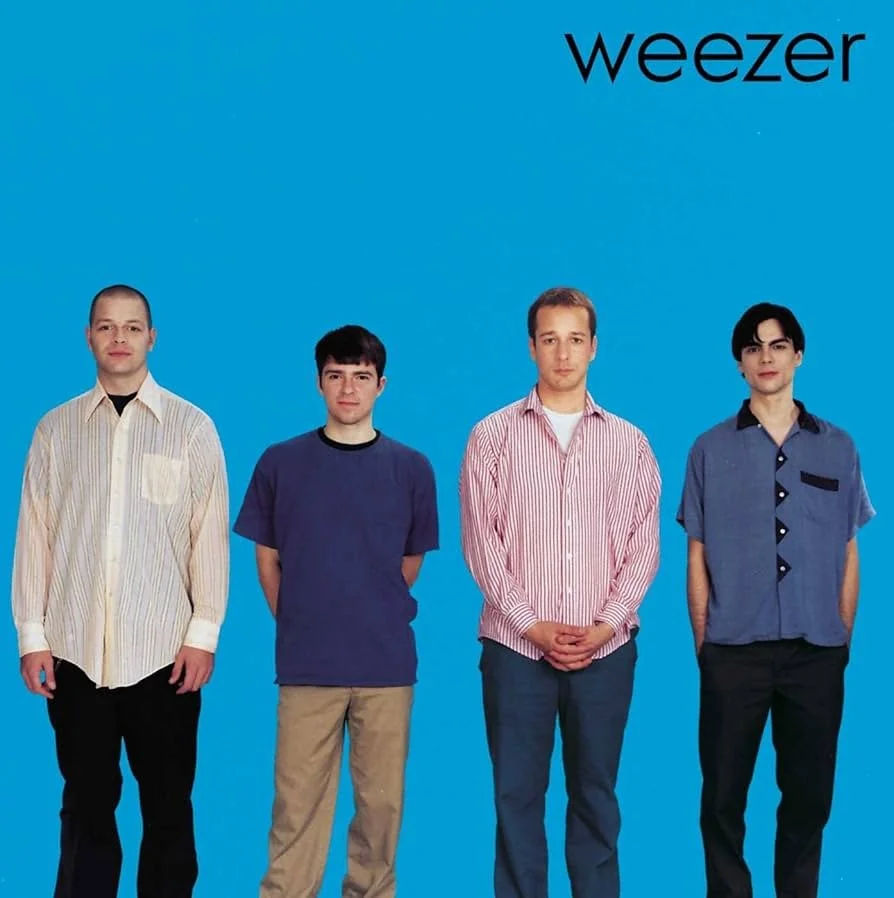
Our sincere apologies, people. As brilliant as ‘Blue’ is, we believe that Weezer eventually went one better. This isn’t to take anything away from this record, though, as it is a genuine masterpiece that captures perfectly Weezer’s mix of Beach Boys harmonies, grungy guitars, classic songwriting, geekiness, goofiness and love of pop melodies.
Of course, you already know the singles ‘Buddy Holly’, ‘Undone (The Sweater Song)’ and ‘Say It Ain’t So’. But what about the thick guitars and despair of ‘The World Has Turned And Left He Here’, the acoustic-electric-acoustic-electric opener ‘My Name is Jonas’, the playful pop-punk of ‘Surf Wax America’, the whimsical ‘Holiday’ and lovelorn, drawn-out closer ‘Only in Dreams’? Every teenage boy can relate to the desire to have a girlfriend who will laugh for ‘No-One Else’. And that only leaves ‘In The Garage’, which may be the least spectacular track here but is still ace, with a gorgeous melody, singalong lyrics and even a harmonica solo.
It is worth tracking down the excellent b-sides from this era, including ‘Mykel and Carli’ (a fun, upbeat tune, even if the downbeat lyrics lament the tragic loss of two schoolfriends in a road accident), ‘Susanne’ (a mix of barbershop quartet and west end musical show tune, through a grunge filter) and ‘Jamie’, one of Rivers Cuomo’s more primitive songwriting efforts but a delightful nugget of adolescent pop.
In a year that also brought us Green Day’s ‘Dookie’, Offspring’s ‘Smash’ and Rancid’s ‘Let’s Go’, ‘The Blue Album’ was a unique, important record and genuinely one of the best albums of 1994.
Standout tracks: ‘No-One Else’, ‘The World Has Turned and Left Me Here’, ‘Holiday’
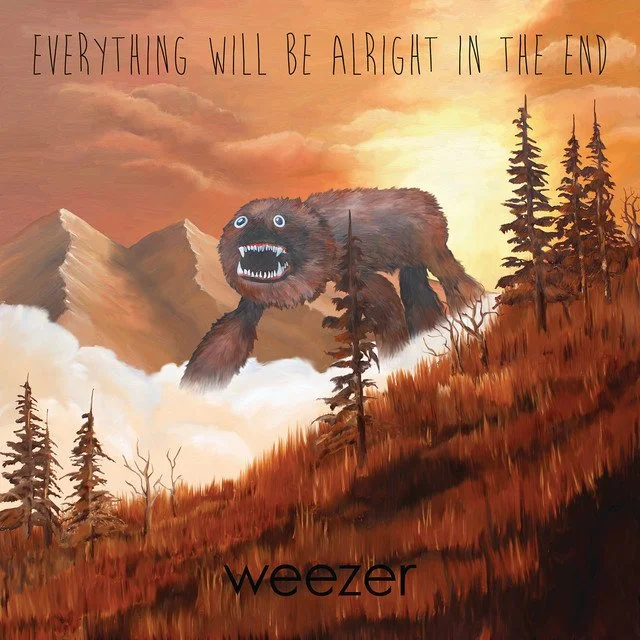
This may be a controversial choice for Number 1, but we believe that ‘Everything Will Be Alright In The End’ has the edge over ‘Blue’ and ‘Pinkerton’. It has everything: raw production, variety, storytelling (‘The British Are Coming’), fun (‘Da Vinci’), Blue-era energy (‘Lonely Girl'), whimsy (‘Go Away’), riffs (‘Back To The Shack’), desperation (‘Ain’t Got Nobody’), genuinely tearjerking moments (‘Foolish Father’, ‘Eulogy For a Rock Band’), and a bona fide 3-part rock opera to close proceedings.
For many, ‘EWBAITE’ heralded the start of a new, exciting era for Weezer, re-emerging from their trend of releasing increasingly formulaic music (‘Raditude’ and ‘Death to False Metal’) and their flawed attempts to recapture past glories (‘Hurley’). The first taste of this record was when Weezer debuted ‘Back to the Shack’ at some live shows, showcasing an awesome, simple riff over which Rivers Cuomo directly addressed the collective decision to return to the garage rock days of their youth (“Sorry guys I didn't realize that I needed you so much / I thought I'd get a new audience, I forgot that disco suck / I ended up with nobody and I started feeling dumb / Maybe I should play the lead guitar and Pat should play the drums”). And what a return it was!
More so than anything since ‘The Green Album’, ‘EWBAITE’ gives the impression that it was always intended to be heard as an entire record rather than just a collection of songs. The tracklisting is meticulously crafted, starting with the gradual build-up into ‘Ain’t Got Nobody’ which has a strong claim as the best opening track in their discography. It is Weezer at their most ‘emo’ (if you can tolerate that term) and it draws you in more and more with each listen. Once this track starts, it simply feels wrong not to listen to the whole record in its entirety, strangely feeling both exhausted and re-invigorated by the end. Every listen brings a new experience, and the fact that ‘Go Away’ saw such a resurgence in 2025/26 shows that the songwriting from this era was timeless and unique.
Standout tracks: ‘Foolish Father’, ‘Lonely Girl’, ‘Da Vinci’

…and a special mention…
So, you’ve made it to the end of our Weezer ranking. Well done. However, this is only the beginning. For those who don’t know, Weezer’s singer and main songwriter Rivers Cuomo is prolific, to say the least. It is rumoured that he has written something in the region of 3,500 songs since he began writing music in the late 70s. That’s a lot of music.
Album tracks like ‘Up in the Clouds’ (from 2026’s ‘Gold Album’), ‘Can’t Stop Partying’ and ‘I Don’t Want to Let You Go’ (both from ‘Raditude’), and several others, were already known within the fan community long before they were recorded for their respective Weezer albums. In some cases, the original demo versions are significantly better in their raw demo form, and there is an absolute treasure trove of music to discover once you have exhausted everything in the list above.
So, where can you find it all? In addition to peer-to-peer resources (just Google them), Rivers Cuomo himself spent some time in 2021 compiling a website called “Mister Rivers’ Neighborhood”, where you can download ‘Weezify’, a Spotify-esque player that contains all of his demos. It is well worth exploring. There have also been some compilations of Rivers’ demos and solo recordings, titled the ‘Alone’ series.
Some of our favourite songs that aren’t quite Weezer tracks, but belong amongst them, are ‘Blast Off!’ (which was allegedly going to be on ‘Songs From The Black Hole’, a concept album that would have come before ‘Pinkerton’), ‘I Was Scared’ and the reflective piano ballad ‘My Day is Coming’. Have fun discovering some other hidden gems!